
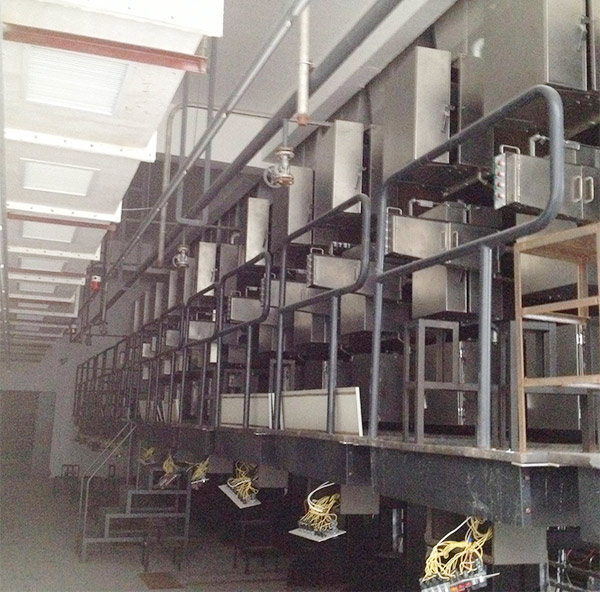
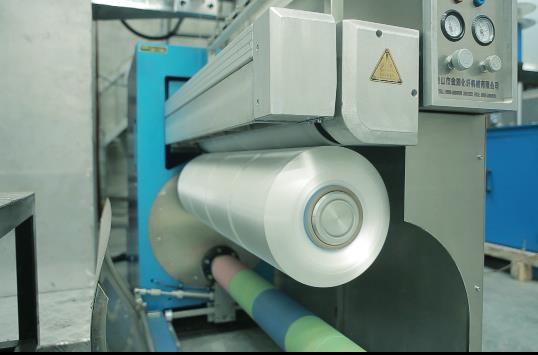
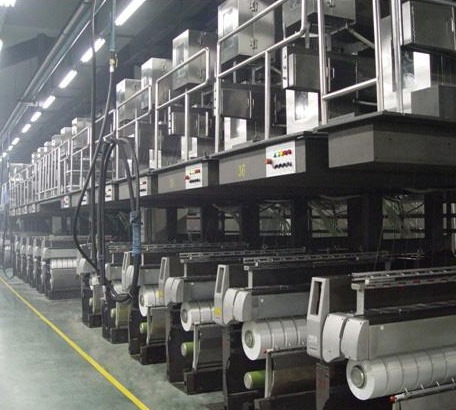
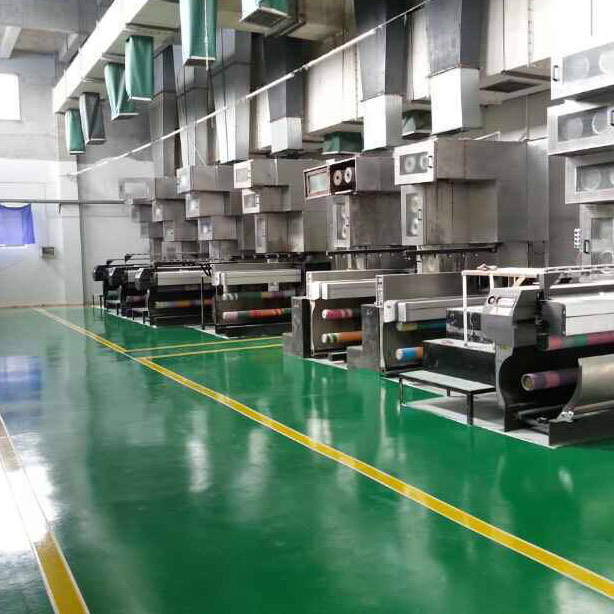
- Polypropylene spinning machine
- Polypropylene FDY equipment
- Polyester POY spinning machine
- Polyamide FDY common and high strength equipment
- Polyester FDY equipment
- Polyester high strength equipment
- polyester、Polyamide、 Polypropylene BCF equipment
- Small spinning machine
- All kinds of spinning special parts
- Structural Optimization of the Three Core Units of Polypropylene Spinning Machine
- A grain, a thread, a piece of cloth: How can the Kaizhou Textile Expo connect the industrial chain and break through the barrier of brand building?
- The 15-16 Technology Innovation Symposium for the Textile Industry was held.
- Adapting to the changes of the seasons and maintaining the stability of equipment - The seasonal operation management method for polypropylene spinning machines
- The 2026 Textile Market Conference was held in Caoqiao, Shaoxing.
- As winter approaches | People should focus on conserving energy during winter, and keep their skills sharp throughout the year. Ensure proper winter maintenance of the spinning equipment and prepare for the end-of-year production!

- Contact:Mr. Huang Guofu
- Cel:0086-13901505556
- Fax:0086-519-83341119
- Email:czfb5556@126.com
- Add:No. 288-8 ChangLi Rd, Huangli Town, Changzhou, JS PRV.
The 15-16 Technology Innovation Symposium for the Textile Industry was held.
Release date: [2026/11/17]
Read total of [7] times
The "15-17" Scientific and Technological Innovation Development Seminar for the Textile Industry, jointly organized by the China Textile Industry Federation, the Textile Industry Science and Technology Development Center, and Donghua University, was held in Beijing on November 14th. The conference reviewed and discussed the key directions for technological development in the textile industry and its sub-sectors, inviting academicians, experts, universities, innovation platforms, research institutes, and key enterprise representatives to offer suggestions for the industry's technological innovation efforts.
Zhang Chuangxiong, the director of the Science and Technology Development Department of the China Textile Industry Federation, interpreted the overall thinking of "15-17" textile technological innovation in his report. During this period, the industry focused on the deep integration of technological innovation and industrial innovation, adhering to high-end, green, healthy, and intelligent development, and aiming to basically achieve new industrialization by 2035.
The development goals of textile technology are: by 2030, the level of self-reliance and strength in industry technology will be significantly improved. Specifically, the R&D intensity of key enterprises will reach over 3%; the core technologies in four major fields of advanced, green, healthy, and intelligent will be accelerated in breakthroughs, and the number of fields where they lead the race will increase significantly; the cumulative number of ISO international standards led by the industry will exceed 60; technological innovation and industrial innovation will mutually empower each other, and the role of innovation-driven will be significantly enhanced.
The six key tasks include: strengthening systematic and efficient technological research and development, promoting key project demonstration applications, building multi-level collaborative innovation platforms, promoting efficient transformation and application of results, improving new high-quality standards support, and deepening diversified scientific and technological talent training. By focusing on the development of 12 major categories and 20 key common technologies in the four directions of advanced, green, healthy, and intelligent, a series of technical solutions will be formed, ultimately converting the industry's technological advantages into industrial competitiveness.
Lin Lin, the president of the China Dyeing and Printing Industry Association, from the perspective of industrial innovation and integration development, reviewed the innovation and breakthroughs of key technologies such as digital inkjet printing, non-aqueous medium dyeing, continuous flat-bed printing of knitted fabrics, chemical reduction printing, and new fiber printing, as well as the development trends of digital and intelligent technologies in the dyeing industry. She proposed that the dyeing industry should continue to play the role of a technological innovation carrier, shifting from the "following-type" and "improvement-type" innovation centered on process optimization in the past to "leading-type" innovation based on fundamental theories and original innovation breakthroughs, promoting the industry to shift from price competition to quality and value competition.
Li Guimei, the president of the China Industrial Textile Products Association, proposed that industrial textile products are an important part of the new materials industry, providing important basic materials and technical support for the development of future industries. They have huge potential for intelligentization, greenization, and high-endization. During the "15-17" period, the innovation roadmap for industrial textile products will include material technology, forming technology, functional finishing, application technology, and testing and evaluation technology. The key tasks will focus on basic research, key core technology breakthroughs, multi-level innovation platform construction, promoting high-level applications through integration innovation, and establishing an industry-level high-quality standard system.
Declaration: The content and template of this article are collected from the internet and are copyrighted by the original authors. If there is any infringement, please notify us immediately and we will delete it.
Related products
Latest news
- The 15-16 Technology Innovation Symposium for the Textile Industry was held.
- Structural Optimization of the Three Core Units of Polypropylene Spinning Machine
- A grain, a thread, a piece of cloth: How can the Kaizhou Textile Expo connect the industri
- Adapting to the changes of the seasons and maintaining the stability of equipment - The se
- The 2026 Textile Market Conference was held in Caoqiao, Shaoxing.
- As winter approaches | People should focus on conserving energy during winter, and keep th
- Ice and Fire - Raw Material Price Surge Hits, Printing and Dyeing Under Pressure! The Mate
- The 27th Third Special Meeting of the Council of the China Textile Engineering Society was
- Handling of filament blocking faults in polypropylene spinning machines and key points for
- Manager's Must-Know | Management is not more effective through greater complexity: Simplif