
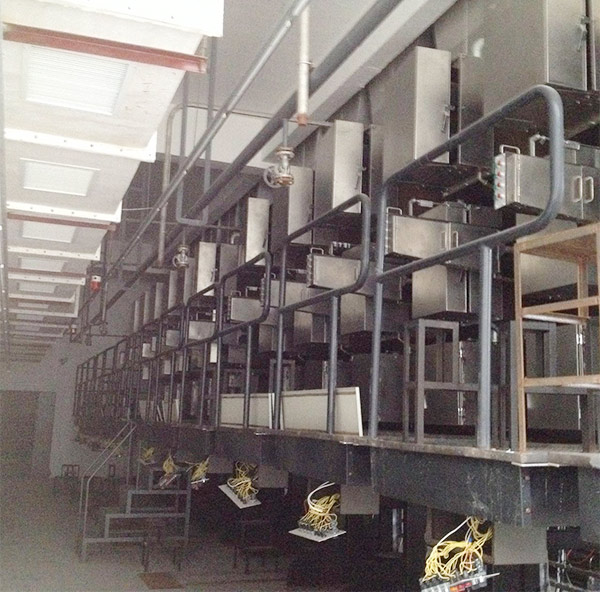
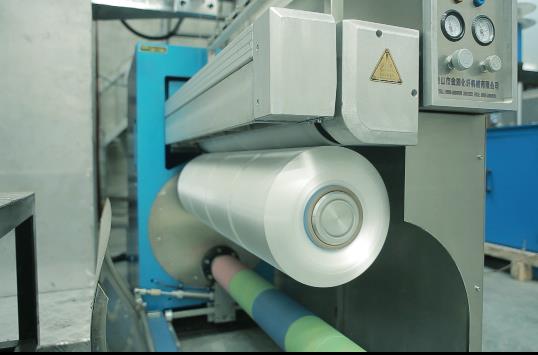
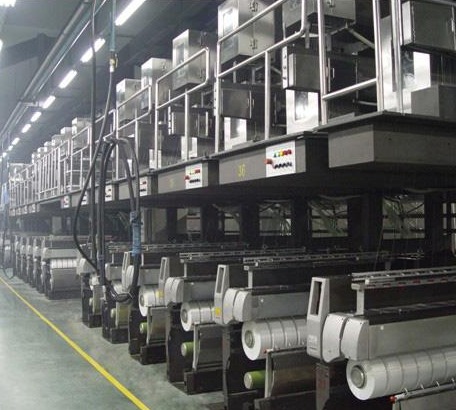
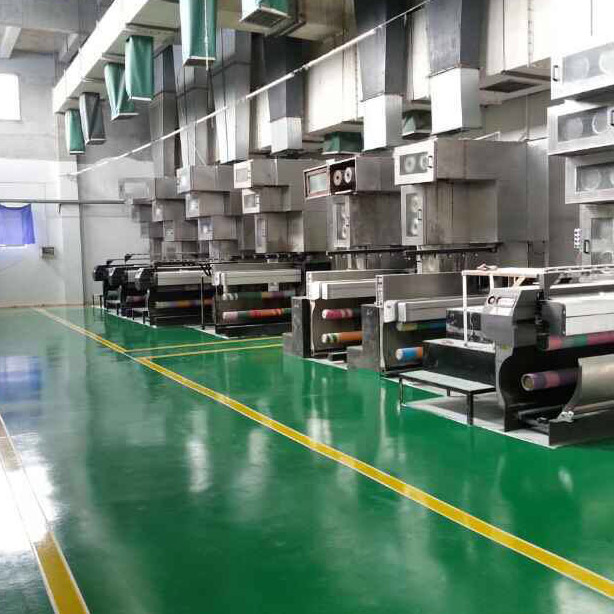
- Polypropylene spinning machine
- Polypropylene FDY equipment
- Polyester POY spinning machine
- Polyamide FDY common and high strength equipment
- Polyester FDY equipment
- Polyester high strength equipment
- polyester、Polyamide、 Polypropylene BCF equipment
- Small spinning machine
- All kinds of spinning special parts
- From the slicing process to the silk cake, what exactly did the polypropylene Puqiang FDY spinning machine go through?
- The 2026 Shanghai Autumn Yarn Expo, a yarn exhibition, concluded officially at the National Exhibition Center.
- The quality improvement and standard promotion conference for the sewing equipment industry was held in Taizhou.
- The acrylic polypropylene spinning machine frequently jams the filament? Let's look for the reasons from the temperature and the equipment ends.
- Passing down the craftsmanship, unforgettable gratitude for the teacher | With dedication to craftsmanship, we express our respect for teachers. Fubon Chemical Fiber Machinery wishes all teachers a happy holiday!

- Contact:Mr. Huang Guofu
- Cel:0086-13901505556
- Fax:0086-519-83341119
- Email:czfb5556@126.com
- Add:No. 288-8 ChangLi Rd, Huangli Town, Changzhou, JS PRV.
Oil prices soar, textile industry at crossroads: upstream producers cut output, downstream retailers stockpile goods. When will the cold upstream and hot downstream situation end?
Release date: [2026/4/24]
Read total of [171] times
On April 20th, the international crude oil market witnessed another sharp fluctuation. Brent and WTI crude oil futures opened with a significant increase of nearly 7%, once again approaching the 100-dollar mark. The ongoing escalation of the geopolitical conflict in the Middle East, the disruption of shipping in the Strait of Hormuz, and the tightening of supply from oil-producing countries have completely dashed the market's expectations of an end to the war and a fall in oil prices.
As the starting point of the textile and chemical fiber industry chain, the high and volatile price of crude oil has continuously transmitted cost pressure to the entire textile industry chain through the rigid chain of "crude oil → naphtha → PX → PTA → polyester → polyester fiber".
The textile market is experiencing polarization.
Due to the sluggish demand from the downstream sector, the polyester filament market has recently entered a "bearish trend". Due to the sluggish demand from the downstream sector, the polyester filament market has recently entered a "bearish trend". This round of price cuts has not effectively stimulated downstream purchases; instead, it has intensified the观望attitude of weaving enterprises.
As a result of this, the operating rates of the textile industry chain have shown significant differences: The comprehensive operating rate of chemical fiber weaving in Jiangsu and Zhejiang regions has dropped to 52.72%, a significant decline compared to earlier periods, and some small-scale weaving factories have reduced production and shut down; The operation rate of the reeling process remains relatively stable, at around 75%, but it still has declined compared to the same period in previous years.
The fabric dyeing factories are booming, and traders are hoarding stocks against the trend.
Contrary to the sluggishness in the upstream production of polyester fibers and weaving, the market transactions of the downstream fabric and dyeing factories remain highly active, presenting a "lean season is not dull" situation.
Although the current dyeing industry is facing rising costs of dyes, steam and labor, the increase in dye prices is limited, and some enterprises even have a cost imbalance, the orders are still abundant, and the factory operation rates remain at a high level. The demand for white base fabrics is strong, and the prices of base fabrics have slightly increased. The enthusiasm of traders and second-hand buyers to purchase goods has been high.
In the short term, international oil prices will remain in a high-level fluctuation due to geopolitical factors. The price of polyester filament lacks the impetus for a significant rebound and is likely to continue a weak consolidation trend. Under the dual pressures of insufficient orders and unstable costs, weaving enterprises' production rates may continue to hover at a low level, and their procurement strategies will maintain the "small batch, multiple batches" demand-oriented model.
In the downstream fabric and printing & dyeing market, under the dual influence of cost support and inventory demand, prices may remain stable and there is still room for local price increases. However, it is necessary to be vigilant of the risk of price correction due to the subsequent decline in demand and accumulation of inventory.
Currently, the textile market is fraught with various contradictions. Enterprises should view the fluctuations in the market situation rationally. Upstream polyester factories should control their production capacity and optimize the inventory structure to avoid disorderly price cuts and competition; midstream weaving enterprises need to focus on high-quality orders, strictly control raw material and finished product inventories, and reduce operational risks; downstream traders need to purchase goods moderately and make reasonable arrangements based on their own capital and sales capabilities to prevent risks from price fluctuations in the future.
Connect the world. Lead the future.
In April, Shishi City witnessed a surge of trends and a burst of business opportunities. From April 18th to 20th, the 28th Taiwan-Mainland Textile and Apparel Expo and the Global Men's Clothing Supply Chain Exhibition was grandly held at the Exhibition and Art Center of Shishi Clothing City. As an influential industry event for the textile and apparel industries on both sides of the Taiwan Strait, this exhibition, with the theme of "Connecting the World Through Chains and Leading the Future", comprehensively presented the complete ecological picture of the textile and apparel industry chain, covering aspects such as fabric research and development, intelligent manufacturing, and cross-border logistics.
At this grand event, the trend exhibition focusing on "Fashion and Technology Products" was particularly eye-catching. The "FabricsChina - China Textile Fabric Fashion Trends and Fashion and Technology Innovation Product Release" exhibition area, which made a splendid appearance here, not only brought together China's popular textile products and the "top ten types of textile innovation products" from renowned fiber enterprises and leading clothing brands, but also collaborated with outstanding local enterprises in Shishi to jointly create an innovative release venue that integrates technology, functionality and intelligence.
The new trends in fabrics for the 2027 spring and summer season are hidden here.
The tranquility and softness of "ripples", the richness and retro charm of "sediment", the vitality and freshness of "tides", the avant-garde and pioneering nature of "explosion"... As the authoritative trend release window of the Maritime Expo, the Technology & Functional Fabrics Trend Area focuses on the 2027 Spring/Summer Chinese Textile Fabric Trend as its core, presenting a panoramic display around four themes. Through the interpretation of popular colors and the display of innovative fabrics, the technological and fashionable design language is transformed into a tangible and perceptible visual experience.
From 117 outstanding domestic fabric enterprises, 525 cutting-edge innovative fabrics each have their unique features. Among them, 127 fabrics are from local enterprises in Shishi. The products comprehensively cover 2027 spring and summer popular colors such as calm night gray, crimson ore red, tobacco brown, and starry deep blue. They ingeniously integrate the texture of natural fibers and core functions such as antibacterial and deodorizing, windproof and rainproof, and unidirectional moisture-wicking. With matte and simple textures, relaxed and practical structures, and restrained yet elegant designs, they vividly present the research and development achievements of technological functional fabrics, providing professional references for industry product research and design innovation.
The policy for high-quality development of the light textile industry in the 15th Five-Year Plan has been announced.
On the morning of April 21st, the State Council Information Office held a press conference to introduce the industrial and information technology development situation in the first quarter of 2026. According to the information disclosed at the press conference, the year-on-year growth rate of industrial output value of large-scale enterprises in the first quarter was 6.1%, and the contribution rate of industry to economic growth was nearly 40%. In related fields such as consumer goods industry, equipment manufacturing, and raw material industry, positive changes were observed. The textile industry has received multiple policy benefits in areas such as technological innovation, green transformation, and gradient cultivation.
Steady progress, the "three-pronged strategy" continues to deepen
Steady progress, "Three Product" strategy continues to deepen In terms of policy deployment, the Ministry of Industry and Information Technology recently issued the "Implementation Plan for Enhancing the Compatibility between Consumer Goods Supply and Demand and Further Promoting Consumption", and accelerated the promotion of standardized announcement management in key industries such as textiles. Tao Qing stated, "During the '15th Five-Year Plan' period, we will focus on doing three things: First, issue and implement policy documents for high-quality development of light textiles and other industries in the '15th Five-Year Plan', and formulate action plans for leading the optimization and upgrading of the industry through textile and light industry standards; Second, accelerate the implementation of the implementation plan for enhancing the compatibility between consumer goods supply and demand, systematically promote the construction of China's consumption brand clusters, and expand product supply in areas such as health, national trends, and elderly care; Third, deeply implement the 'Artificial Intelligence + Three Products' special action, accelerate the construction of dedicated large models and high-quality data sets in the consumer goods field, and develop new models such as flexible production, intelligent supply, and personalized customization. "
Declaration: The content and template of this article are collected from the internet and are copyrighted by the original authors. If there is any infringement, please notify us immediately and we will delete it.
Related products
Latest news
- The 2026 Shanghai Autumn Yarn Expo, a yarn exhibition, concluded officially at the Nationa
- From the slicing process to the silk cake, what exactly did the polypropylene Puqiang FDY
- The quality improvement and standard promotion conference for the sewing equipment industr
- The acrylic polypropylene spinning machine frequently jams the filament? Let's look for th
- Passing down the craftsmanship, unforgettable gratitude for the teacher | With dedication
- The textile industry chain has been steadily recovering, and market orders have steadily r
- When selecting polypropylene spinning machines, the first step is not to focus on the conf
- Fubang Chemical Fiber Machinery Reminder | Excessive rainfall and high humidity bring many
- The 2026 China International Textile Yarn (Autumn-Winter) Exhibition (YarnExpo) has grandl
- Understand the manufacturing secrets of polypropylene spinning machines