
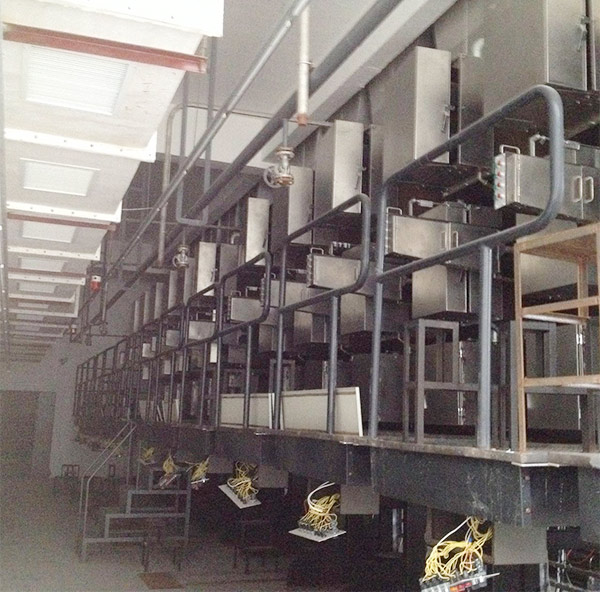
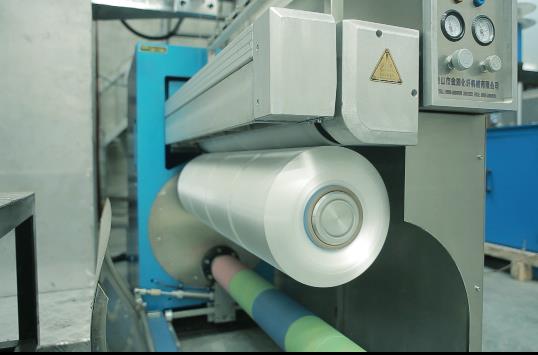
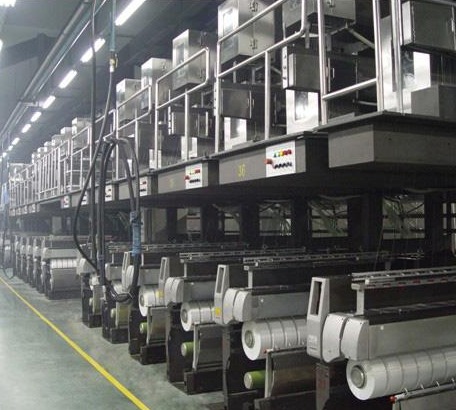
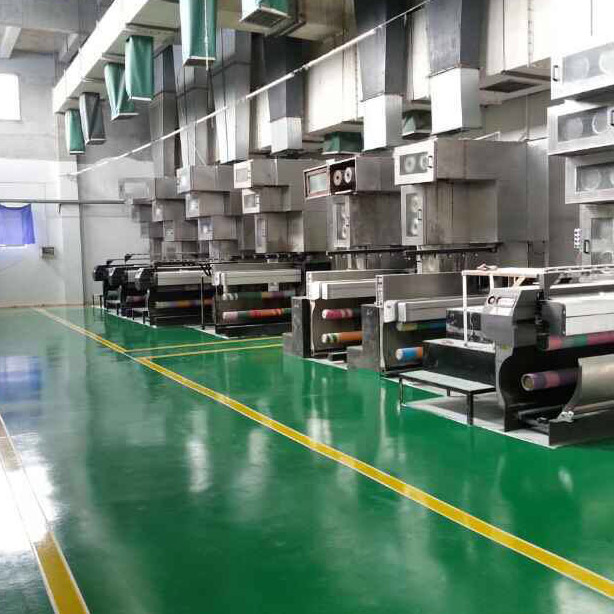
- Polypropylene spinning machine
- Polypropylene FDY equipment
- Polyester POY spinning machine
- Polyamide FDY common and high strength equipment
- Polyester FDY equipment
- Polyester high strength equipment
- polyester、Polyamide、 Polypropylene BCF equipment
- Small spinning machine
- All kinds of spinning special parts
- From the slicing process to the silk cake, what exactly did the polypropylene Puqiang FDY spinning machine go through?
- The 2026 Shanghai Autumn Yarn Expo, a yarn exhibition, concluded officially at the National Exhibition Center.
- The quality improvement and standard promotion conference for the sewing equipment industry was held in Taizhou.
- The acrylic polypropylene spinning machine frequently jams the filament? Let's look for the reasons from the temperature and the equipment ends.
- Passing down the craftsmanship, unforgettable gratitude for the teacher | With dedication to craftsmanship, we express our respect for teachers. Fubon Chemical Fiber Machinery wishes all teachers a happy holiday!

- Contact:Mr. Huang Guofu
- Cel:0086-13901505556
- Fax:0086-519-83341119
- Email:czfb5556@126.com
- Add:No. 288-8 ChangLi Rd, Huangli Town, Changzhou, JS PRV.
Focus on innovation and transformation, explore the new future of glass fiber and textile machinery
Release date: [2026/4/21]
Read total of [154] times
On April 17, 2026, the 2026 Work Conference of the Glass Fiber and Products Industry and the 2nd Regular Meeting of the Sixth Council of the China Glass Fiber Industry Association were held in Liaocheng, Shandong Province. This conference, with the theme of "Strengthening industrial chain synergy and facilitating high-quality development", focused on the new situation of the glass fiber industry's development, technological innovation and equipment upgrading. Topics such as the domestication of spinning machinery equipment and breakthroughs in glass fiber weaving technology became the core focus.
Focus on innovation and transformation, explore the new future of glass fiber and textile machinery
Liu Jianhua, the Party Committee Standing Member and Vice President of the China Building Materials Federation, and the President of the China Glass Fiber Industry Association, stated that the current economic situation both at home and abroad is complex, and the operation of the building materials industry and the development of enterprises are facing significant pressure. The reconfiguration of market supply and demand, the promotion of the dual-carbon goal, and the improvement of consumption quality are forcing the industry to accelerate its transformation. As a key area of inorganic non-metallic new materials, the glass fiber and products industry should promote the transformation of the industrial system with a global perspective, expand new development paths, and strive to become a new economic growth point for the building materials industry.
China is already a global leader in glass fiber production, with its production capacity accounting for a dominant position in the world. However, the industry started relatively late and has long developed in a simplistic and follower-like manner. It has overly relied on capacity expansion and cost control, and has insufficient overall technological innovation capabilities. As overseas related enterprises gradually withdraw, China's glass fiber industry must rely on its own strength to solve the problems of green, intelligent and high-end development, and carry out technological innovation based on the upgrading of downstream demands, to shape new advantages for sustainable development.
Currently, the new energy vehicle industry is experiencing rapid growth, which has led to a surge in the demand for thermoplastic glass fibers. The development of high-frequency and high-speed information technologies such as AI computing power and 6G communication has further fueled the continuous heating up of the PCB, CCL and upstream electronic glass fiber markets, injecting new impetus into the industry. However, the supply of high-end electronic glass fibers is still insufficient. High-end products such as ultra-fine, low dielectric constant, low expansion glass fibers and extremely thin ultra-thin materials are difficult to meet the demands of core electronic equipment. The key bottleneck lies in the insufficient supply of high-end equipment like spinnerets.
In response to this, key enterprises in the industry should enhance collaboration, form innovation consortia, and leverage mechanisms such as "challenge-proposing and awarding" to accelerate the domestication and intelligent controllability of key equipment like high-end glass fiber electronic furnaces, thereby enhancing the resilience, security level and international competitiveness of the electronic information industry chain. The China Building Materials Federation will prioritize recommending relevant projects for inclusion in the national major scientific and technological research efforts of the building materials industry, connect with the national key research and development plans, support the results in participating in industry science and technology awards, and include core research personnel in the industry expert database.
In the future, the fiberglass industry will leverage technological innovation as its driving force, prioritize high-quality development, and be guided by market demands. It will leverage the role of large enterprises as the main innovators, and promote small and medium-sized enterprises to transform from component suppliers to collaborative innovation partners. It will establish an open and integrated innovation system, cultivate and expand new productive forces, and achieve a leap from basic materials to industrial key base materials, thereby supporting the high-quality transformation of the building materials industry.
Gu Ping, the president of the China Textile Machinery Association, delivered a speech at an industry exchange event with the theme "With Innovation as the Pillar, Facilitating the Leap of Textile Industry". He shared information on three aspects to the glass fiber industry enterprises: viewing the textile machinery industry from the supply side, exploring the technological innovation development of textile machinery equipment from the demand side, and looking forward to the development direction and strategic path for the "15th Five-Year Plan" period.
Gu Ping pointed out that from the supply side, the textile machinery industry has shifted from meeting shortages to providing high-quality supply. The transformation from traditional manual operation to intelligent operation has become an essential course. It is now transforming from single-machine intelligence to a provider of overall solution for complete equipment. At the same time, it is focusing on flexible manufacturing, the construction of fully-automated factories with no human intervention, and the research and development of green and sustainable technologies. He emphasized that in 2026, global enterprise digital transformation has entered the "digital and intelligent symbiosis" deep-water zone. Cloud deployment has become the mainstream choice in the industry, and AI-native platforms have become a necessity for enterprises.
From the perspective of the demand side, the dual-circulation market provides a vast space for the textile machinery industry. The domestic textile industry accounts for more than 50% of the global market, and the demand for textile machinery equipment accounts for more than half of the global total. In terms of the overseas market, the overseas investment by textile enterprises has driven a favorable trend for the export of textile machinery. He particularly analyzed the strategic position of Xinjiang, pointing out that as a bridgehead for opening up to the west, the layout of related key projects will bring new opportunities to the textile machinery industry. At the same time, significant technological breakthroughs have been achieved in textile machinery equipment in areas such as lyocell short fibers, cotton testing, and digital printing, reaching the world-leading level.
Looking forward to the "14-15" period, Gu Ping stated that the global economic growth rate is expected to be positive for China. The textile machinery industry will be guided by the "dual carbon" goal and focus on four directions: greenification, intelligence, high-endization, and integration. He emphasized that a collaborative innovation ecosystem with deep integration of "academia, industry, research, and application" should be established. Relying on platforms such as joint laboratories and national research and development centers, high-end talents should be gathered to enhance the overall competitiveness of the industry and help China's textile machinery industry achieve new breakthroughs on the global stage.
Declaration: The content and template of this article are collected from the internet and are copyrighted by the original authors. If there is any infringement, please notify us immediately and we will delete it.
Related products
Latest news
- The 2026 Shanghai Autumn Yarn Expo, a yarn exhibition, concluded officially at the Nationa
- From the slicing process to the silk cake, what exactly did the polypropylene Puqiang FDY
- The quality improvement and standard promotion conference for the sewing equipment industr
- The acrylic polypropylene spinning machine frequently jams the filament? Let's look for th
- Passing down the craftsmanship, unforgettable gratitude for the teacher | With dedication
- The textile industry chain has been steadily recovering, and market orders have steadily r
- When selecting polypropylene spinning machines, the first step is not to focus on the conf
- Fubang Chemical Fiber Machinery Reminder | Excessive rainfall and high humidity bring many
- The 2026 China International Textile Yarn (Autumn-Winter) Exhibition (YarnExpo) has grandl
- Understand the manufacturing secrets of polypropylene spinning machines