
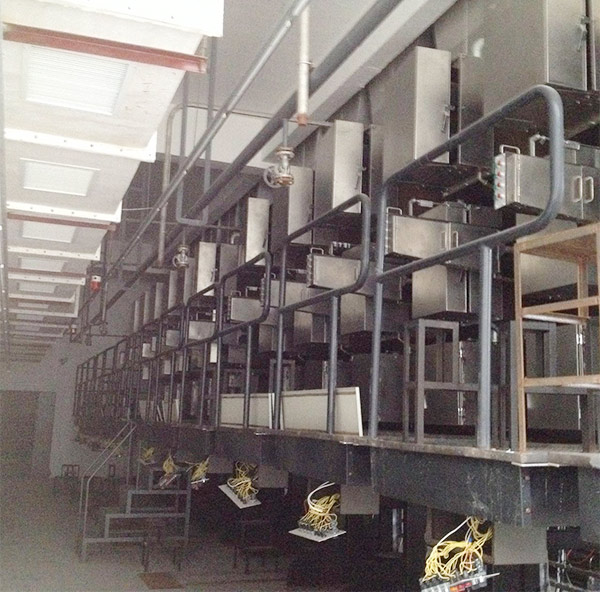
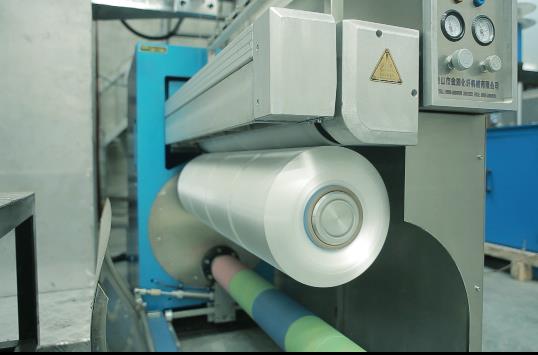
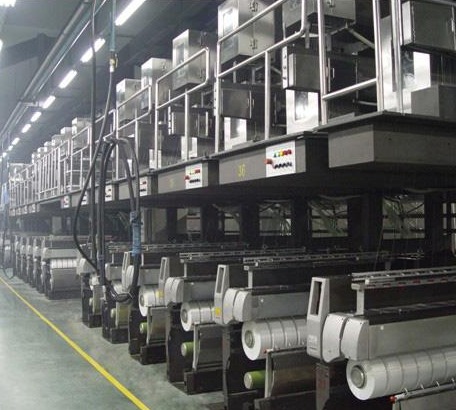
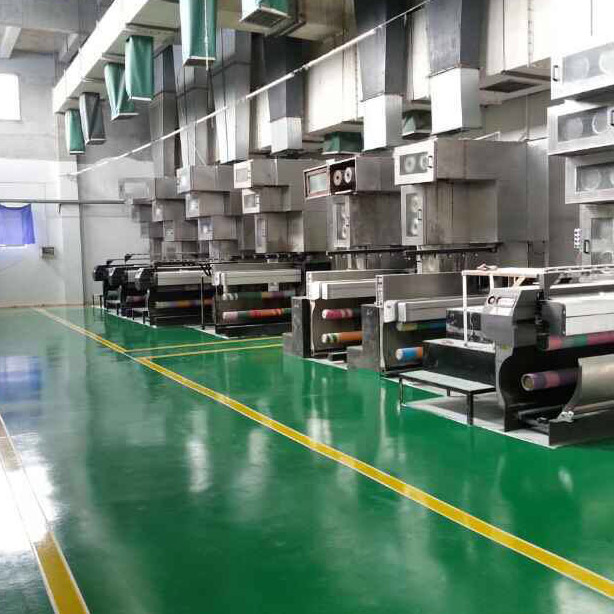
- Polypropylene spinning machine
- Polypropylene FDY equipment
- Polyester POY spinning machine
- Polyamide FDY common and high strength equipment
- Polyester FDY equipment
- Polyester high strength equipment
- polyester、Polyamide、 Polypropylene BCF equipment
- Small spinning machine
- All kinds of spinning special parts
- Painting depicts the prosperous times, calligraphy writes the magnificent chapters | Changzhou Fubang Chemical Fiber Machinery Factory wishes our motherland enjoy favorable weather and abundant resources, and the people live in peace and prosperity!
- Mountains and rivers remain unharmed, the moon is full and people are as they always are | Fubon Chemical Fiber Machinery wishes you a joyful Mid-Autumn Festival—may the full moon reflect your smile and warmth fill your heart!
- The 2026 Shanghai Autumn Yarn Expo, a yarn exhibition, concluded officially at the National Exhibition Center.
- From the slicing process to the silk cake, what exactly did the polypropylene Puqiang FDY spinning machine go through?
- The quality improvement and standard promotion conference for the sewing equipment industry was held in Taizhou.
- The acrylic polypropylene spinning machine frequently jams the filament? Let's look for the reasons from the temperature and the equipment ends.

- Contact:Mr. Huang Guofu
- Cel:0086-13901505556
- Fax:0086-519-83341119
- Email:czfb5556@126.com
- Add:No. 288-8 ChangLi Rd, Huangli Town, Changzhou, JS PRV.
The 2025 Textile and Garment Innovation Annual Conference and the Gongqingcheng Down Industry Development Conference came to a successful conclusion
Release date: [2025/12/9]
Read total of [266] times
From multiple breakthroughs in technological innovation to the collaborative reconstruction of the industrial chain, from the acceleration of low-carbon transformation to the deepening of global layout, the textile and garment industry is entering a new stage of modern industrial system construction.
On December 5th, the 2025 Textile Conference was grandly held in Jiujiang, Jiangxi Province, with the theme of "Embarking on a New Journey of Modern Textile Industry Construction", outlining a new blueprint for the industry's development. During the same period, the 2025 Textile and Garment Innovation Annual Conference and the Gongqingcheng Down Industry Development Conference were held in Gongqingcheng. The organizers specially arranged for the attending guests to watch the live broadcast of the textile conference together, listening to the top-level voices of the industry and sharing cutting-edge strategic insights across regions simultaneously, vividly interpreting the overall radiation power and industry leading power of this annual grand event.
As an important part of the Textile conference, this innovation annual meeting closely adheres to the theme of "Quality as the Foundation, Brand as the Force", deeply connecting with the down garment industry genes and characteristic resources of Gongqingcheng. It not only explores the macro development trends of the industry but also directly addresses the micro practical pain points of the industry, injecting fresh energy into the industry's goal of "winning by quality and developing by brand".
Liang Pengcheng, vice president of the China National Textile and Apparel Council, Wang Bin, Second-level Inspector of the Jiujiang Municipal Government, Hu Weidong, member of the Standing Committee of the CPC Gongqingcheng Municipal Committee and vice mayor, Liu Wei, vice mayor of Gongqingcheng City, Yu Huilin, director of the Gongqingcheng Municipal Bureau of Industry and Information Technology, and other leaders attended. The conference was presided over by Qi Mei, deputy director of China Textile Information Center.
Technology leadership sketches a "roadmap" for digital transformation
Integrating into future industries and opening up new scenarios and fields for industrial development is an important source and path for forming new driving forces for the development of the textile industry. Li Bo, director of the Productivity Promotion Department of the China National Textile and Apparel Council, deputy director of the China Textile Information Center, and director of the Textile Product Development Center, in his speech titled "Trends in Technological Innovation and Product Development in the Textile Industry", provided a detailed analysis of the current development status of cutting-edge products and technologies such as functional textiles, eco-friendly textile technologies, and digital intelligence technologies. Focusing on the application scenarios of textile technology such as future health, future space, and future energy, he stated that with the technological progress and cross-integration in related disciplines, the performance and functions of technical textiles will become more prominent, and the degree of professionalism and specialization will become increasingly in-depth. The integration with smart textiles will create brand-new products and solutions for technical textiles, meeting the development needs of strategic industries such as infrastructure, aerospace, and deep sea, as well as important livelihood industries such as health and security.
He also pointed out that the in-depth development of the integration of digital and real economies has reshaped the industrial structure and underlying foundation, becoming an important engine for new quality productivity. As the leading unit of the "Textile Industry Special Group of the Manufacturing Digital Transformation Standards Working Group of the National Information Technology Standardization Technical Committee", China Textile Information Center, in collaboration with textile manufacturing enterprises, digital service providers, and research institutions and universities, has jointly initiated the research and development of the "One Map and Four Lists" for the digital transformation of the textile industry. A "Digital Transformation Scene Map of the Textile Industry" has been formed, covering five major industrial chain links: fibers, spinning, weaving, dyeing and finishing, and finished products (clothing and home textiles).
This map comprehensively covers the three major business areas of the textile industry chain: R&D and design, production and manufacturing, and operation and management. It systematically sorts out 50 main scenarios and 41 sub-scenarios. Each scenario includes key elements such as current status rating, data elements, knowledge models, technical tools, talent skills, and pain points. It provides authoritative theoretical basis and methods for the industry to formulate standards and promote the implementation of applications, making the digital transformation path of textile and garment enterprises clearer and more efficient.
The content and template of this article are compiled from the Internet. The copyright belongs to the original author. If there is any infringement, please inform us in time and contact us for deletion.
Related products
Latest news
- Painting depicts the prosperous times, calligraphy writes the magnificent chapters | Chang
- Mountains and rivers remain unharmed, the moon is full and people are as they always are |
- The 2026 Shanghai Autumn Yarn Expo, a yarn exhibition, concluded officially at the Nationa
- From the slicing process to the silk cake, what exactly did the polypropylene Puqiang FDY
- The quality improvement and standard promotion conference for the sewing equipment industr
- The acrylic polypropylene spinning machine frequently jams the filament? Let's look for th
- Passing down the craftsmanship, unforgettable gratitude for the teacher | With dedication
- The textile industry chain has been steadily recovering, and market orders have steadily r
- When selecting polypropylene spinning machines, the first step is not to focus on the conf
- Fubang Chemical Fiber Machinery Reminder | Excessive rainfall and high humidity bring many