
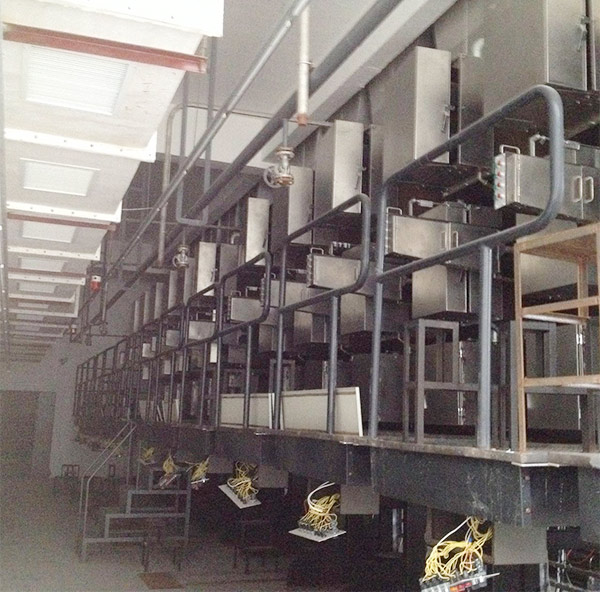
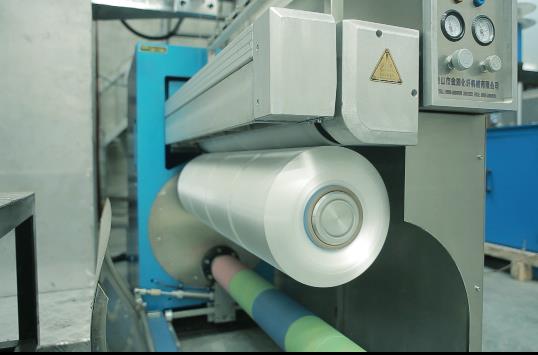
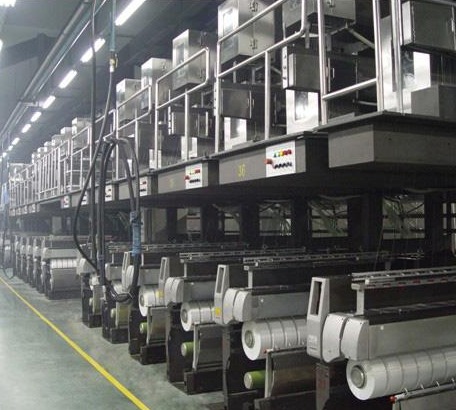
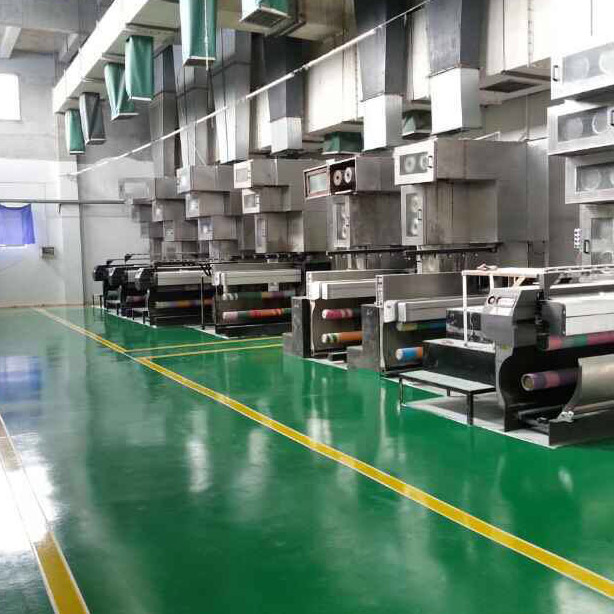
- Polypropylene spinning machine
- Polypropylene FDY equipment
- Polyester POY spinning machine
- Polyamide FDY common and high strength equipment
- Polyester FDY equipment
- Polyester high strength equipment
- polyester、Polyamide、 Polypropylene BCF equipment
- Small spinning machine
- All kinds of spinning special parts
- Manager's Must-Know | Management is not more effective through greater complexity: Simplify and streamline, shift from hierarchical control to efficient empowerment
- The third member assembly of the Shaoxing Textile Industry Association and the modern textile industry chain connection meeting were successfully held.
- Iteration of polypropylene FDY spinning machine equipment: Process stability, temperature control accuracy and selection logic
- Raw material prices fluctuate, outdoor sports events gain new momentum, the history of costume design continues, how can intangible cultural heritage skills be carried forward in the new era?
- Temperature differences, dryness, dust... The five major hazards of the spinning machine in autumn are all explained here in one go.

- Contact:Mr. Huang Guofu
- Cel:0086-13901505556
- Fax:0086-519-83341119
- Email:czfb5556@126.com
- Add:No. 288-8 ChangLi Rd, Huangli Town, Changzhou, JS PRV.
The textile industry chain has been steadily recovering, and market orders have steadily rebounded.
Release date: [2026/9/8]
Read total of [120] times
The textile market officially came to an end in August, marking the conclusion of the summer-autumn off-season. The industry as a whole has shaken off its previous sluggishness and the overall industry prosperity has steadily risen. With the early start of terminal autumn-winter stock preparation and the continuous recovery of the domestic consumer market, key indicators such as production, new orders, and raw material procurement have all improved simultaneously, and production and sales have maintained steady growth. Based on the overall operation situation in August, the textile market presents a differentiated operating characteristic of continuous expansion in production, gradual recovery of orders, structural increase in inventory, overall stable employment, and rising costs but pressure on terminal prices. The recovery momentum at the end of the off-season is obvious, laying a solid foundation for the traditional peak season回暖 in September and October.
Production continues to recover and production and sales growth rates exceed the stage's new highs
The production enthusiasm of textile enterprises in August has significantly improved, and the industry output has maintained growth for nine consecutive months. The growth rate this month has even reached a new high since May this year. The production resilience at the end of the off-season exceeded expectations. In July, the industry as a whole was still in the low-availability and weak-production off-season norm. After entering August, the machine availability rates in major production areas such as Jiangsu, Zhejiang, Shandong, and Guangdong continued to rise, and the fabric and fabric factories accelerated their production schedules. The equipment capacity utilization rate steadily recovered, completely improving the situation of weak production in the off-season in the first half of the year.
The recovery of the production end is mainly attributed to two points. One is that the terminal market demand has gradually improved, and the orders for autumn-winter clothing and home textiles have been gradually confirmed. This directly drives the increase in the availability and production of the upstream spinning and weaving processes. The second is that after a period of equipment debugging and capacity optimization, the overall supply capacity of the industry has improved, capable of adapting to the gradually recovering market demand. With the steady recovery of production, the production and sales connection has become more smooth, and the overall yarn production rate has risen month-on-month. Leading enterprises can basically achieve production according to demand, and the production balance is in a good state.
Market orders steadily recover and industry backlog orders continue to increase
The recovery of market demand directly drives the growth of new orders of textile enterprises, and both domestic and export orders have been repaired. This effectively supports the continuous production of factories. With the continuous landing of new orders, the unfinished orders in the industry have risen for seven consecutive months. The growth rate of order backlog in August was even the fastest since March this year, truly reflecting the steady recovery of textile terminal demand.
The continuous backlog of orders also reflects the current situation of phased supply-demand mismatch in the industry. During the off-season, enterprises generally had low availability and low inventory. Facing the concentrated arrival of autumn-winter stock preparation demand, the production capacity could not be quickly matched in the short term. In terms of inventory, the increase in finished textile inventory in August reached a new high since September 2025. This was caused by enterprises' early stock preparation and batch production, and at the same time, the orders of small factories were scattered, resulting in a certain accumulation of finished textile inventory. The raw material procurement end also witnessed a significant recovery. After a slight decline in July, the purchasing activity in August significantly increased, reaching the highest level in the past four months, and the replenishment willingness of enterprises has fully intensified.
Declaration: The content and template of this article are collected from the internet and are copyrighted by the original authors; any infringement will be promptly informed and deleted upon contact.
Related products
Latest news
- Manager's Must-Know | Management is not more effective through greater complexity: Simplif
- The third member assembly of the Shaoxing Textile Industry Association and the modern text
- Iteration of polypropylene FDY spinning machine equipment: Process stability, temperature
- Raw material prices fluctuate, outdoor sports events gain new momentum, the history of cos
- Temperature differences, dryness, dust... The five major hazards of the spinning machine i
- Painting depicts the prosperous times, calligraphy writes the magnificent chapters | Chang
- Mountains and rivers remain unharmed, the moon is full and people are as they always are |
- The 2026 Shanghai Autumn Yarn Expo, a yarn exhibition, concluded officially at the Nationa
- From the slicing process to the silk cake, what exactly did the polypropylene Puqiang FDY
- The quality improvement and standard promotion conference for the sewing equipment industr