
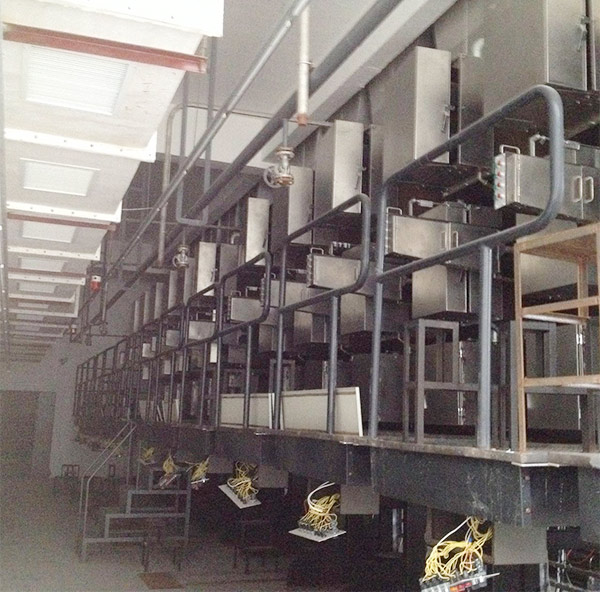
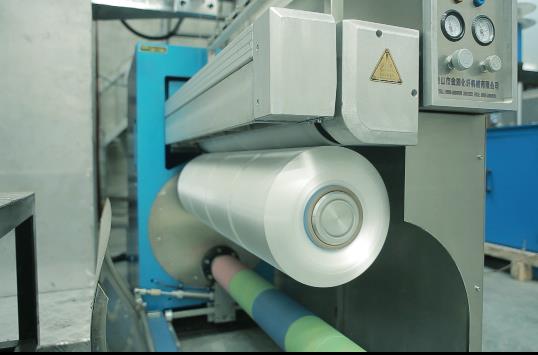
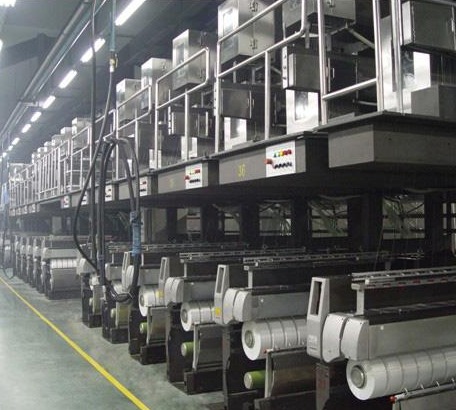
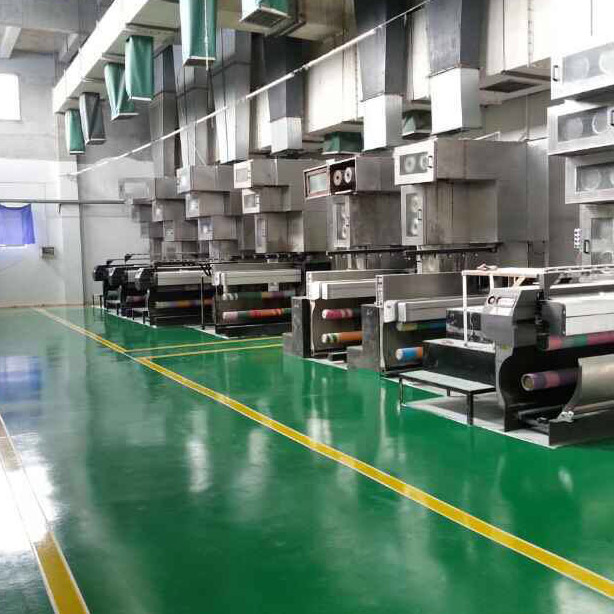
- Polypropylene spinning machine
- Polypropylene FDY equipment
- Polyester POY spinning machine
- Polyamide FDY common and high strength equipment
- Polyester FDY equipment
- Polyester high strength equipment
- polyester、Polyamide、 Polypropylene BCF equipment
- Small spinning machine
- All kinds of spinning special parts
- Painting depicts the prosperous times, calligraphy writes the magnificent chapters | Changzhou Fubang Chemical Fiber Machinery Factory wishes our motherland enjoy favorable weather and abundant resources, and the people live in peace and prosperity!
- Mountains and rivers remain unharmed, the moon is full and people are as they always are | Fubon Chemical Fiber Machinery wishes you a joyful Mid-Autumn Festival—may the full moon reflect your smile and warmth fill your heart!
- The 2026 Shanghai Autumn Yarn Expo, a yarn exhibition, concluded officially at the National Exhibition Center.
- From the slicing process to the silk cake, what exactly did the polypropylene Puqiang FDY spinning machine go through?
- The quality improvement and standard promotion conference for the sewing equipment industry was held in Taizhou.
- The acrylic polypropylene spinning machine frequently jams the filament? Let's look for the reasons from the temperature and the equipment ends.

- Contact:Mr. Huang Guofu
- Cel:0086-13901505556
- Fax:0086-519-83341119
- Email:czfb5556@126.com
- Add:No. 288-8 ChangLi Rd, Huangli Town, Changzhou, JS PRV.
A thousand threads weave the splendid grassland, and the splendid dress narrates the epic
Release date: [2025/7/23]
Read total of [411] times
The embroidered cloud patterns, antlers and flame patterns flow between the lapels of the clothes. The collar and cuffs outlined with gold and silver threads are exquisite yet bold... Entering the garment workshop of Siqingga, an inheritor of the Mongolian clothing and accessories of the Urad ethnic group in Inner Mongolia Autonomous Region, one is dazzled by over a hundred sets of traditional Urad clothing and women's headwear.
Recently, a topic sparked by a video of Mongolian costume changes - "I was forcibly controlled by the aesthetics of Mongolian costumes" - has trended on Weibo. Many netizens said that it seemed as if they had worn the entire splendor of the grassland on their clothes.
Cao Li, the dean of the School of Design at Inner Mongolia University of Arts, who has been engaged in the research of traditional Mongolian costume art for many years, introduced that the Mongolian people live on the Mongolian Plateau, where the climate is cold and the people mainly lead a nomadic life. Therefore, Mongolian costumes are also called Mongolian robes. Its features include a right-lapel cross-collar, wide sleeves, and no slit at the hem, which not only keeps it warm and windproof but also makes it convenient to ride. The accessories are also quite exquisite. For instance, the belts are made of 3 to 4 meters of silk. Men tie them tightly to facilitate horseback riding and archery, while women let them hang down to show off their figures. Headdresses are a symbol of status for Mongolian women. They are woven from coral, agate and silver chains and can weigh more than ten pounds. The upturned tip design of the boots makes it convenient to walk on sandy ground, and the upper part of the boots is embroidered with auspicious patterns such as scroll grass patterns and cloud patterns...
Siqingga said that for hundreds of years, the Mongolian people have lived in various natural environments such as grasslands, snow-capped forests, deserts, mountains, rivers and farmlands in both concentrated and scattered forms. Therefore, due to the diversity of the natural environment, there are regional and cultural differences in the types, styles, fabric colors, sewing techniques, and practical functions of Mongolian costumes.
Up to now, the 28 Mongolian tribes living in Inner Mongolia have 108 sets of standard costumes and 34 sets of headwear.
Nowadays, driven by cultural and tourism consumption, Mongolian costumes have broken through traditional boundaries and carried out "fashion" innovations.
Mongolian fashion designed by Yang Ying, a "post-95s" designer, has been showcased on the runways of China International Fashion Week and Paris Fashion Week. In her view, consumers have diverse demands for the design of Mongolian costumes, "such as fabric, practical functions, historical traditions, cultural depth, and pure handcrafting, all of which are essential attributes."
Yang Ying introduced the main promotional items of Mongolian clothing she designed for Paris Fashion Week. "Overseas audiences are very interested in Mongolian embroidery, so the series (clothing) we presented in Paris mainly features Mongolian embroidery. The large areas of embroidery and patterns on the clothing are very prominent and obvious, while the design styles are more simple and elegant."
Zasaktu Mongolian embroidery originated in the late 12th and early 13th centuries. The Mongolian women of the Zasaktu ethnic group living in the Xing 'an Mountains have recorded the cultural customs of their nomadic production and life with silver needles and colorful threads.
Our embroidery emphasizes the pursuit of natural colors. White symbolizes purity and milk, blue represents immortality, and red implies life and passion. Meng Lixin, the inheritor, introduced, "The Zasaktu patterns reveal the cosmology of the grassland herdsmen: the scroll grass pattern symbolizes continuous vitality, the coiled intestinal pattern represents auspiciousness and continuity, and the cloud and fire patterns represent the worship of natural forces."
No matter how innovative and creative they are, designers still insist on preserving the "wisdom" of traditional Mongolian clothing: the wide robe can be used as bedding. The high collar protects against wind and sand, and the waist belt guards the ribs. The narrow sleeves fit the waist, which is conducive to galloping on horseback...
For each piece of clothing, we need to collect historical verified pictures and textual materials, and on this basis, make improvements that suit modern people's aesthetic and dressing habits. Yang Ying said.
Chao Lemeng, the chairperson of the Inner Mongolia Ethnic Costume Association, said that Mongolian costumes often feature patterns related to nature such as the sun, moon, stars, flowers, trees, birds and beasts. These patterns are not only decorative but also embody the Mongolian people's gratitude towards nature and their admiration for life.
The content and template of this article are compiled from the Internet. The copyright belongs to the original author. If there is any infringement, please inform us in time and contact us for deletion.
Related products
Latest news
- Painting depicts the prosperous times, calligraphy writes the magnificent chapters | Chang
- Mountains and rivers remain unharmed, the moon is full and people are as they always are |
- The 2026 Shanghai Autumn Yarn Expo, a yarn exhibition, concluded officially at the Nationa
- From the slicing process to the silk cake, what exactly did the polypropylene Puqiang FDY
- The quality improvement and standard promotion conference for the sewing equipment industr
- The acrylic polypropylene spinning machine frequently jams the filament? Let's look for th
- Passing down the craftsmanship, unforgettable gratitude for the teacher | With dedication
- The textile industry chain has been steadily recovering, and market orders have steadily r
- When selecting polypropylene spinning machines, the first step is not to focus on the conf
- Fubang Chemical Fiber Machinery Reminder | Excessive rainfall and high humidity bring many