
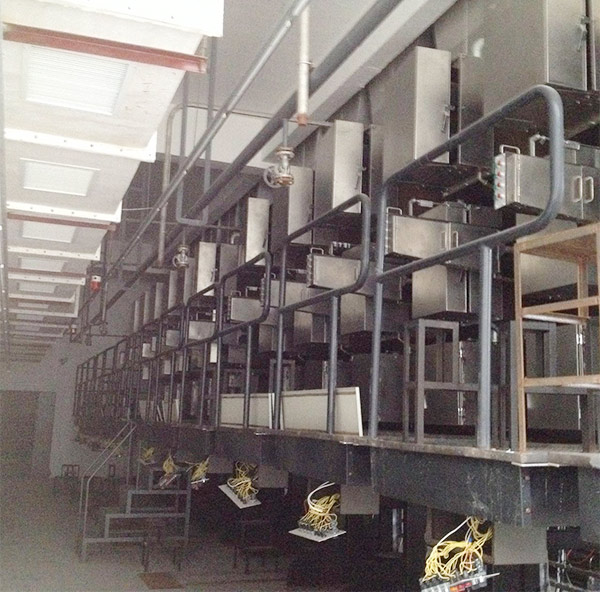
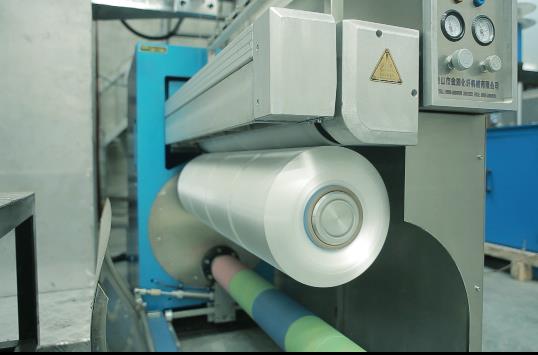
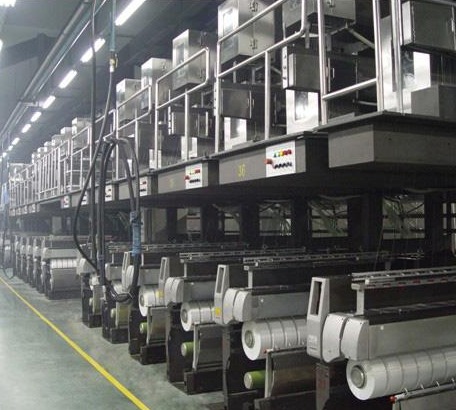
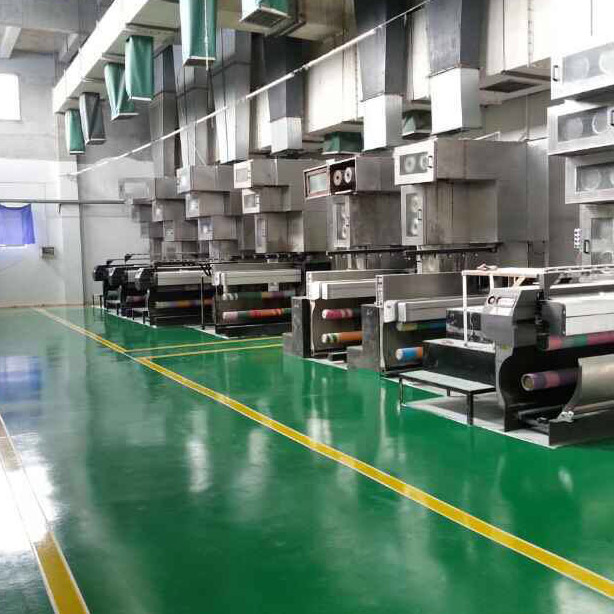
- Polypropylene spinning machine
- Polypropylene FDY equipment
- Polyester POY spinning machine
- Polyamide FDY common and high strength equipment
- Polyester FDY equipment
- Polyester high strength equipment
- polyester、Polyamide、 Polypropylene BCF equipment
- Small spinning machine
- All kinds of spinning special parts
- From the slicing process to the silk cake, what exactly did the polypropylene Puqiang FDY spinning machine go through?
- The 2026 Shanghai Autumn Yarn Expo, a yarn exhibition, concluded officially at the National Exhibition Center.
- The quality improvement and standard promotion conference for the sewing equipment industry was held in Taizhou.
- The acrylic polypropylene spinning machine frequently jams the filament? Let's look for the reasons from the temperature and the equipment ends.
- Passing down the craftsmanship, unforgettable gratitude for the teacher | With dedication to craftsmanship, we express our respect for teachers. Fubon Chemical Fiber Machinery wishes all teachers a happy holiday!

- Contact:Mr. Huang Guofu
- Cel:0086-13901505556
- Fax:0086-519-83341119
- Email:czfb5556@126.com
- Add:No. 288-8 ChangLi Rd, Huangli Town, Changzhou, JS PRV.
Deepen standardization work and enhance the core competitiveness of the industrial textile industry
Release date: [2024/6/20]
Read total of [601] times
At present, the total amount of fiber processing in China's textile industry exceeds 60 million tons, accounting for more than 50% of the total amount of global fiber processing, and from 2020 to 2023, China's total textile and garment exports remain above 300 billion US dollars for four consecutive years, contributing more than 50% to the growth of world textile and garment exports, ranking first in the world for 30 consecutive years. China's textile industry has formed the world's largest and most complete industrial system, manufacturing capacity and international trade scale for a long time ranked first in the world, becoming one of the first industrial categories to enter the ranks of the world's manufacturing powers. Manufacturing innovation, material innovation, product innovation systematic development, China's textile science and technology innovation has entered the "and run, lead" coexistence stage. High-performance fiber production capacity accounts for more than one-third of the world, the textile machinery autonomy rate is greater than 75%, the localization rate of key basic components of high-end equipment is greater than 50%, and the localization rate in key application areas has steadily increased.
As an important part of China's textile industry and strategic emerging industries, industrial textiles are widely used in medical and health, environmental protection, transportation, aerospace, new energy and many other fields, and play an important supporting role in public health event response, natural disaster prevention and control, infrastructure construction, environmental protection and governance. Under the guidance of governments at all levels and the traction of market demand, China's industrial textile industry has developed rapidly and innovated actively, and the total amount of fiber processing in 2023 has exceeded 20 million tons, an increase of more than 1 times in ten years, ranking second among the three major terminal consumption areas of China's textile. China has become the world's most complete industrial textile industry categories, the most rich product categories, the most complete industrial chain of the country, international trade cooperation, technical exchanges continue to deepen, the international discourse power and influence continue to increase.
The Chinese Academy of Engineering's "Green Book on Technological Innovation in Key Areas of China's Manufacturing Industry - Technology Roadmap (2019)" pointed out that China's textile technology and equipment, communication equipment, advanced rail transit equipment, power transmission and transformation equipment, home appliance industry and other five priority development directions are expected to enter the world's leading ranks by 2025, becoming the leader of technological innovation. As a key area of technological innovation in the textile industry, the industrial textile industry has been continuously innovated in the fields of nonwovens and products, aerospace rigid and flexible composites, high-performance Marine cables, special protective fabrics, high-precision fiber filters, high-performance medical textile materials and other fields in recent years, and its application scope has accelerated, and it has gradually realized the role transformation from running to leading. Industrial textiles are also the focus of the development of developed countries, the United States, Germany and other relevant national strategies, and strive to maintain its global leading advantages, and in terms of science and technology and standardization restrictions on China. In order to further enhance the core competitiveness of the industry and continue to deepen standardization work, it is of great significance to enhance the service guarantee ability of China's industrial textile industry chain, promote the localization of high value-added and high-tech products, and strengthen the international discourse power.
Declaration: The content and template of this article are organized from the network, and the copyright belongs to the original author. If there is infringement, please inform in time and contact to delete.
Related products
Latest news
- The 2026 Shanghai Autumn Yarn Expo, a yarn exhibition, concluded officially at the Nationa
- From the slicing process to the silk cake, what exactly did the polypropylene Puqiang FDY
- The quality improvement and standard promotion conference for the sewing equipment industr
- The acrylic polypropylene spinning machine frequently jams the filament? Let's look for th
- Passing down the craftsmanship, unforgettable gratitude for the teacher | With dedication
- The textile industry chain has been steadily recovering, and market orders have steadily r
- When selecting polypropylene spinning machines, the first step is not to focus on the conf
- Fubang Chemical Fiber Machinery Reminder | Excessive rainfall and high humidity bring many
- The 2026 China International Textile Yarn (Autumn-Winter) Exhibition (YarnExpo) has grandl
- Understand the manufacturing secrets of polypropylene spinning machines