
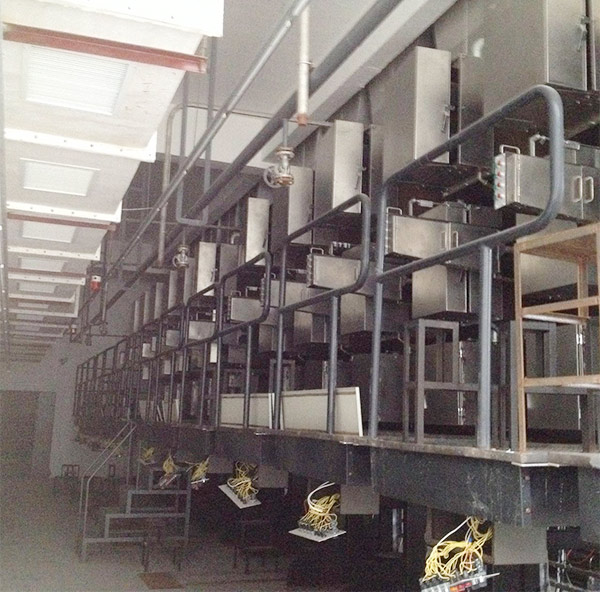
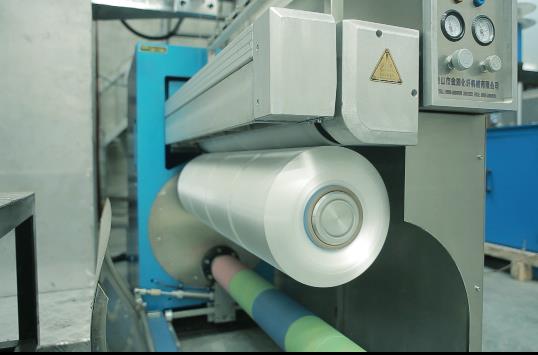
- Polypropylene spinning machine
- Polypropylene FDY equipment
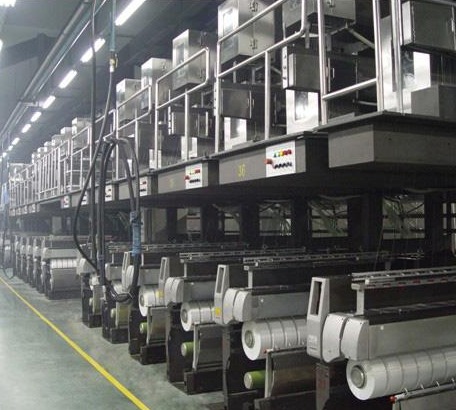
- Polyester POY spinning machine
- Polyamide FDY common and high strength equipment
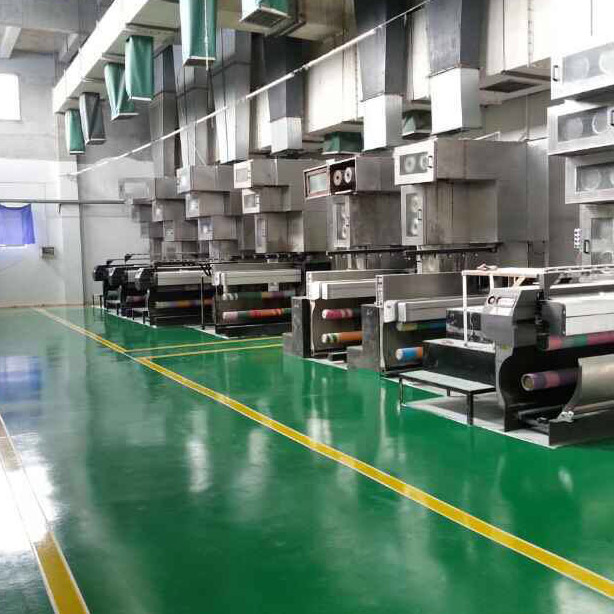
- Polyester FDY equipment
- Polyester high strength equipment
- polyester、Polyamide、 Polypropylene BCF equipment
- Small spinning machine
- All kinds of spinning special parts
- Painting depicts the prosperous times, calligraphy writes the magnificent chapters | Changzhou Fubang Chemical Fiber Machinery Factory wishes our motherland enjoy favorable weather and abundant resources, and the people live in peace and prosperity!
- Mountains and rivers remain unharmed, the moon is full and people are as they always are | Fubon Chemical Fiber Machinery wishes you a joyful Mid-Autumn Festival—may the full moon reflect your smile and warmth fill your heart!
- The 2026 Shanghai Autumn Yarn Expo, a yarn exhibition, concluded officially at the National Exhibition Center.
- From the slicing process to the silk cake, what exactly did the polypropylene Puqiang FDY spinning machine go through?
- The quality improvement and standard promotion conference for the sewing equipment industry was held in Taizhou.
- The acrylic polypropylene spinning machine frequently jams the filament? Let's look for the reasons from the temperature and the equipment ends.

- Contact:Mr. Huang Guofu
- Cel:0086-13901505556
- Fax:0086-519-83341119
- Email:czfb5556@126.com
- Add:No. 288-8 ChangLi Rd, Huangli Town, Changzhou, JS PRV.
A Guide for Managers to Break Through: Empowerment Rather than Control: Helping Enterprises Bid farewell to Internal Friction and Activate the Intrinsic Motivation of Teams!
Release date: [2025/12/12]
Read total of [389] times
In the rapidly changing business environment, many enterprises fall into the misunderstanding that "the more detailed the management, the better the effect", without realizing that excessive management is quietly eroding the vitality of enterprises.
It is like an invisible shackle, seemingly orderly and regulated, but in fact, it restrains innovation and consumes efficiency. Only by breaking free from the trap of excessive management and returning to true refined management can enterprises maintain their competitiveness in the complex market.
The three major traps of overmanagement
Complicated systems: complicating simple issues
Many enterprises have designed overly complex process systems in pursuit of "standardization". A simple reimbursement has to go through five or six levels of approval, and even a minor decision needs to be discussed in multiple meetings. Every task of the employees is strictly quantified and monitored. The system has become a mere formality, resulting in employees spending far more time on processes than on actual work.
This system of "managing for the sake of managing" actually restricts efficiency with processes. To avoid complexity and simplify tasks, employees even reduce necessary work activities, and the innovative vitality of the enterprise is constantly eroded in the repetitive paperwork.
Centralized control: Treating employees like marionettes
Another typical manifestation of overmanagement is that managers are overly involved in everything and interfere too meticulously. From project details to daily division of labor, subordinates almost need to seek approval at every step. Plans were frequently overturned and started over. Over time, the team gradually lost the awareness of active thinking and only waited for clear instructions.
In this way, managers are exhausted dealing with trivial matters, while subordinates have no way to perform. The creativity and initiative of the team are increasingly eroded. Employees are more like "tools" for carrying out instructions rather than thoughtful creators.
Formalism: Mistaking superficial efforts for achievements
Excessive management is often manifested as managers' overly detailed intervention and hands-on handling of everything. Subordinates have to seek approval at every step, and the plans are often changed, causing the team to gradually stop thinking and just wait for instructions. As a result, managers are preoccupied with trivial matters, leaving subordinates unable to exert their abilities. Creativity is gradually eroded, and employees have become mere execution tools rather than thoughtful creators.
The deep-seated root causes of enterprise management problems
Lost focus in direction
When enterprises fail to clarify their own positioning and core path, managers often, due to anxiety over uncertainty, turn to strengthening internal control. This approach of substituting "strengthening management" for strategic thinking has gradually caused the organization to lose its agility and fall into a cycle where the more it is controlled, the more rigid it becomes.
Tissue retardation
As the scale expands, if the organizational form is not optimized in a timely manner, it is easy to breed hierarchical redundancy, departmental estrangement and information blockage. A decision needs to go through a long process before it can be advanced, and market opportunities are often quietly missed during internal turnover.
Misplacement of talents
The new generation of workers generally pursue autonomy and meaning in their work rather than merely following orders. If the command-based control system is still in use and the creative needs and growth aspirations of individuals are ignored, it will not only suppress the vitality of the team but also drive talents to leave quietly.
The divergence between knowledge and action
If values are only hung on the wall and not integrated into systems, they will gradually lose their power. For instance, while emphasizing "customer first", short-term performance indicators are used to force the behavior of front-line staff to be distorted. Advocating "daring to innovate" and using strict accountability to make no one willing to try and make mistakes. The disconnection between words and deeds leaves culture suspended and management soulless.
The Key to Breaking the Deadlock: Five Major Strategies to Achieve
Many people equate "refined management" with "excessive management", but in fact, there is an essential difference between the two: refined management is "result-oriented, using scientific methods to optimize processes and empower employees", while excessive management is "control-oriented, using complex processes to restrict behavior and consume efficiency".
Strategic focus: Subtraction is more important than addition
Focusing on core advantages is the first principle of enterprise management. Rather than blindly chasing every market opportunity, it is better to deeply cultivate the fields where one is competitive. Through customer screening and resource reset, limited resources are concentrated on the links that can create value.
Outstanding enterprises often establish a competitive advantage in depth rather than breadth in specific fields. They understand that the result of trying to meet all customer needs is that they cannot truly meet any customer needs.
Data-driven: Use digitalization to identify business blind spots
Digital transformation is an effective way to avoid excessive management. By introducing technologies such as big data, cloud computing and artificial intelligence, enterprises can achieve a high degree of data integration and sharing, promoting the transformation of decision-making and management methods towards data-driven.
Digital tools can help enterprises reduce all kinds of waste, lower costs, and improve efficiency and quality. However, it should be made clear that digitalization itself is not an end in itself but a means. The key lies in optimizing decision-making rather than increasing the burden on processes.
Performance innovation: Let employees work for themselves
The key to effective motivation lies in stimulating initiative. The "project co-investment + profit sharing" model can be implemented to transform employees from executors to business partners. When personal interests are directly linked to work outcomes, employees naturally shift from "I have to do it" to "I want to do it".
Successful performance management does not lie in how complex the assessment is, but in whether the feedback is simple and transparent. It should make employees clear about how their work promotes the overall goal and provide guidance for continuous growth from it.
Trust Incentives: Four Major Transformations from Control to Empowerment
Replace "monitoring + punishment" with "trust + motivation" to invigorate the organization. Reduce formalistic monitoring methods, implement flexible management, provide employees with sufficient space for trial and error, and encourage innovative exploration. Establish a scientific incentive system, which not only provides generous material rewards for outstanding employees but also offers opportunities such as job rotation, training, and project authorization for their growth, ensuring that employees' efforts are rewarded and they have a path for growth. Organizational synergy: The development Synergy Group forms cross-departmental collaboration teams for core projects, clearly defining the leader, responsibility division, and communication mechanism to avoid buck-passing and shirking. Promote the "internal customer mindset", with each department taking the service connection objects as the orientation and replacing the indicators of a single department with "customer satisfaction". Regularly conduct cross-departmental reviews, sort out the bottlenecks and pain points in collaboration, continuously optimize the connection process, and replace internal friction with synergy.
In conclusion, the essence of management lies in release and empowerment rather than control. Outstanding managers are good at simplifying problems and enhancing efficiency rather than proving their own value by increasing the complexity of processes. In the complex and ever-changing business environment, the real challenge for enterprises lies in maintaining flexibility and adaptability. Excessive management may bring about short-term order, but in the long run, it will inevitably weaken the vitality and competitiveness of the organization.
The content and template of this article are compiled from the Internet. The copyright belongs to the original author. If there is any infringement, please inform us in time and contact us for deletion.
Changzhou Fubon Chemical Fiber Machinery Factory Technical production: Polypropylene spinning machine, polypropylene FDY spinning machine, polypropylene FDY equipment, polyester POY spinning machine, polyester POY production line, polyester POY equipment, polyester POY machinery, polyester recycled bottle FDY spinning machine, polyester FDY spinning machine, polyester FDY machinery, Spandex spinning machine, spinning special parts, polyester small Experimental machine, polypropylene small experimental machine, nylon small experimental machine.
Changzhou Fubon Chemical Fiber Machinery Factory Technical is a research and development and production of all kinds of chemical fiber machinery as the main professional manufacturing suppliers, research, development, production and sales as one, in order to meet the market demand, our factory has established a perfect chemical fiber spinning experimental base, to provide customers with good equipment and technical services. We mainly provide customers with complete sets of polyester, polypropylene, nylon, spandex and other chemical fiber complete sets of equipment, and undertake a variety of related equipment renovation projects and customized services.
Related products
Latest news
- Painting depicts the prosperous times, calligraphy writes the magnificent chapters | Chang
- Mountains and rivers remain unharmed, the moon is full and people are as they always are |
- The 2026 Shanghai Autumn Yarn Expo, a yarn exhibition, concluded officially at the Nationa
- From the slicing process to the silk cake, what exactly did the polypropylene Puqiang FDY
- The quality improvement and standard promotion conference for the sewing equipment industr
- The acrylic polypropylene spinning machine frequently jams the filament? Let's look for th
- Passing down the craftsmanship, unforgettable gratitude for the teacher | With dedication
- The textile industry chain has been steadily recovering, and market orders have steadily r
- When selecting polypropylene spinning machines, the first step is not to focus on the conf
- Fubang Chemical Fiber Machinery Reminder | Excessive rainfall and high humidity bring many