
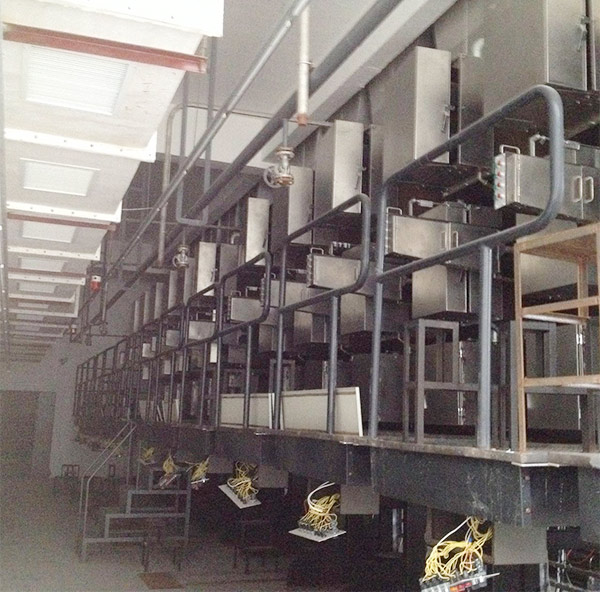
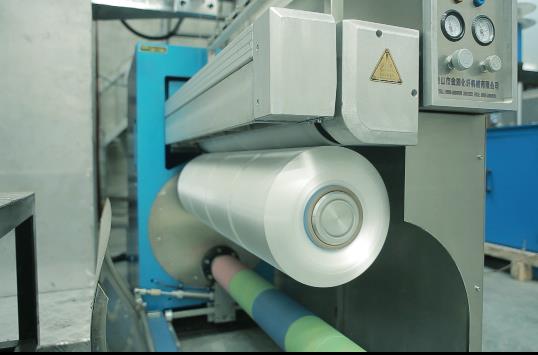
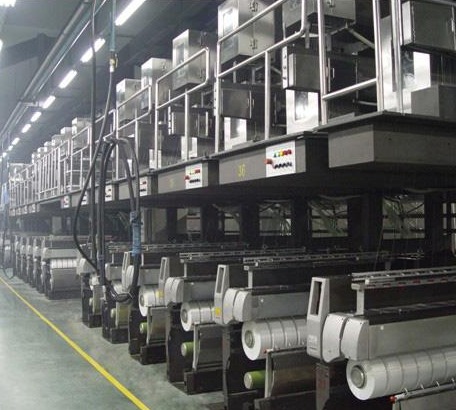
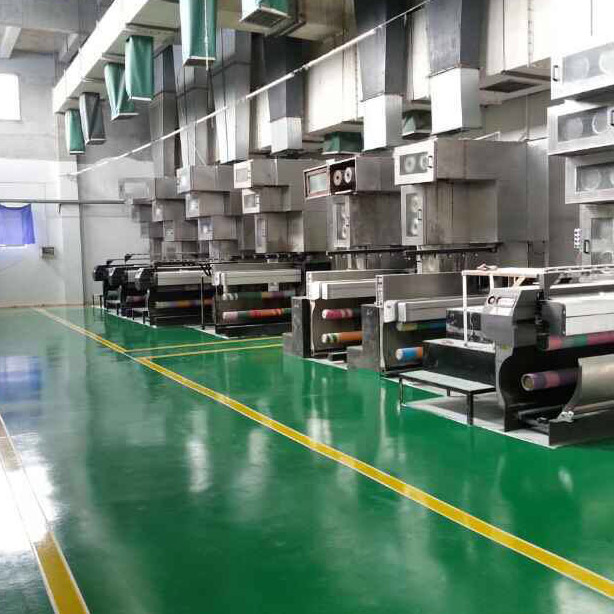
- Polypropylene spinning machine
- Polypropylene FDY equipment
- Polyester POY spinning machine
- Polyamide FDY common and high strength equipment
- Polyester FDY equipment
- Polyester high strength equipment
- polyester、Polyamide、 Polypropylene BCF equipment
- Small spinning machine
- All kinds of spinning special parts
- Passing down the craftsmanship, unforgettable gratitude for the teacher | With dedication to craftsmanship, we express our respect for teachers. Fubon Chemical Fiber Machinery wishes all teachers a happy holiday!
- The textile industry chain has been steadily recovering, and market orders have steadily rebounded.
- When selecting polypropylene spinning machines, the first step is not to focus on the configuration, but to match the machine to the specific application.
- Fubang Chemical Fiber Machinery Reminder | Excessive rainfall and high humidity bring many risks! Tips for maintaining and operating moisture-proof equipment for chemical fiber spinning please keep in mind!
- The 2026 China International Textile Yarn (Autumn-Winter) Exhibition (YarnExpo) has grandly opened.
- Understand the manufacturing secrets of polypropylene spinning machines

- Contact:Mr. Huang Guofu
- Cel:0086-13901505556
- Fax:0086-519-83341119
- Email:czfb5556@126.com
- Add:No. 288-8 ChangLi Rd, Huangli Town, Changzhou, JS PRV.
Nature inspires clever use of spinning technology
Release date: [2022/5/13]
Read total of [822] times
Nature has inspired people to prepare various biomimetic structures. The excellent strength and toughness of natural spider silk are mainly due to its special hierarchical structure, such as β-sheet cross-linking points, helical nanoassemblies with highly arranged molecular chains, and rigid sheath-soft core, etc. Many researchers have achieved better man-made fiber properties by simulating these properties, however, how to make clever use of the spinning process to simultaneously achieve the above-mentioned hierarchical structure features is still challenging.
Recently, the research team of Liu Zunfeng from Nankai University, Zhou Xiang from China Pharmaceutical University and Zhu Meifang from Donghua University, inspired by the structure of spider silk protein, prepared a soluble cross-linked nanogel and spun it with a spider silk-like layer. Structured cross-linked fibers provide a new strategy for direct spinning of high-strength and high-tenacity fiber materials.
The β-sheets in spider silk proteins act as cross-linking points, and the cross-linked network is located within the nanometer-sized globular protein. Therefore, spidroin is soluble and can be directly spun into layered fibers by self-assembly. Inspired by the spider silk structure and spinning process, the researchers prepared soluble nanogels with an internal cross-linked network, and prepared nanogels suitable for different monomers by controlling the concentration of the cross-linking agent during the free radical polymerization process. When the content of cross-linking agent increased from 0.15% to 1.05%, the diameter and aggregation amount of the nanogel macromolecules gradually increased.
To study the relationship between the stretch-spinning ability of the nanogels and the particle size, the researchers spun the fibers on a mechanical tester until the fibers broke, while measuring the mechanical stress. The theoretical model predicts that the critical stress leading to nanogel fracture is inversely proportional to the square root of the nanoparticle radius
To further investigate whether the size and arrangement of nanocomponents can be tuned by adding nucleating particles to improve the mechanical properties of fibers, the researchers prepared single-walled carbon nanotubes/polydopamine (SWNT-PDA) composites and synthesized them in SWNT-PDA. Nanogels with a crosslinker content of 0.15% were synthesized in the presence of 0.15% crosslinkers, and the effects of the introduction of nucleating particles on the nanogel fiber structure and properties were subsequently investigated. The results showed that with the increase of SWNT-PDA content, the breaking strength, breaking strain and toughness of the nanogel fibers showed an upward trend, and the nanocomponents were arranged more neatly and the average diameter decreased.
By pre-stretching the fibers, the arrangement of molecular chains is significantly increased and the average fiber diameter is decreased. For fibers with a pre-tension strain of 50%, this structural evolution significantly increases the fiber's mechanical strength and reduces its elongation at break. After further twisting optimization, a combination of fiber breaking strength of 1.27GPa and toughness of 383MJ/m3 was finally achieved, which is very close to the performance value of natural spider silk.
Related products
Latest news
- Passing down the craftsmanship, unforgettable gratitude for the teacher | With dedication
- The textile industry chain has been steadily recovering, and market orders have steadily r
- When selecting polypropylene spinning machines, the first step is not to focus on the conf
- Fubang Chemical Fiber Machinery Reminder | Excessive rainfall and high humidity bring many
- The 2026 China International Textile Yarn (Autumn-Winter) Exhibition (YarnExpo) has grandl
- Understand the manufacturing secrets of polypropylene spinning machines
- The 2026 Textile Weaving Industry Product Innovation Seminar and New Product Exchange Resu
- Polypropylene spinning machine systematic solution: Precise control from melt extrusion to
- How to choose a polypropylene spinning machine? From production capacity, fineness to equi
- The 2026 China Cotton Textile Industry Association Raw Materials Industry Chain Branch Con