
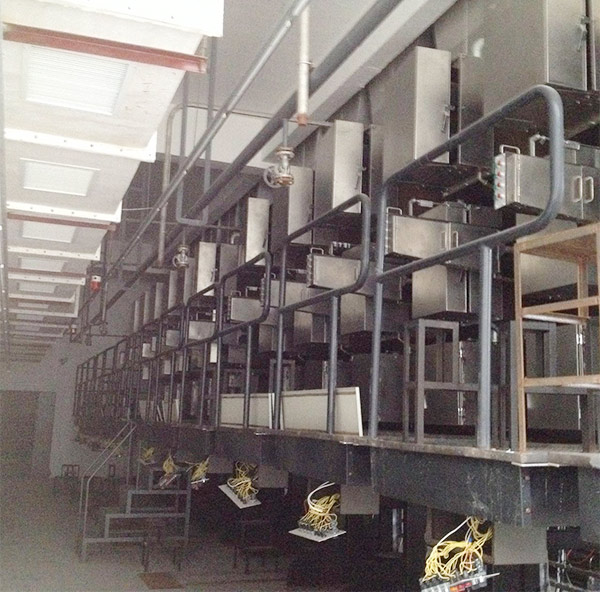
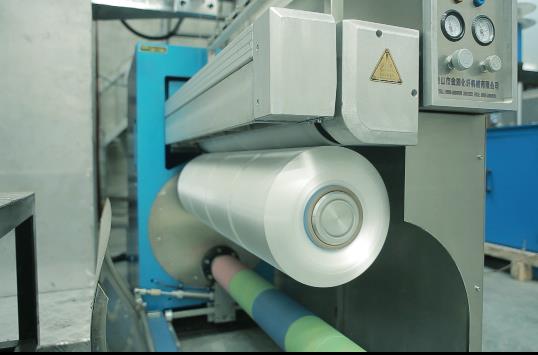
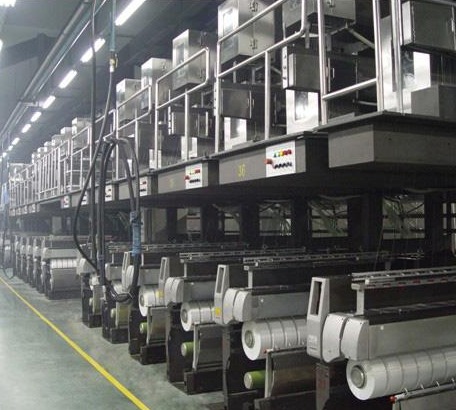
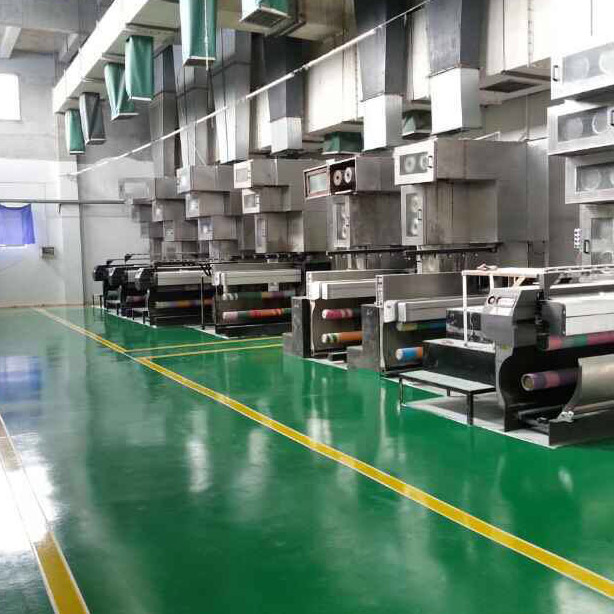
- Polypropylene spinning machine
- Polypropylene FDY equipment
- Polyester POY spinning machine
- Polyamide FDY common and high strength equipment
- Polyester FDY equipment
- Polyester high strength equipment
- polyester、Polyamide、 Polypropylene BCF equipment
- Small spinning machine
- All kinds of spinning special parts
- From the slicing process to the silk cake, what exactly did the polypropylene Puqiang FDY spinning machine go through?
- The 2026 Shanghai Autumn Yarn Expo, a yarn exhibition, concluded officially at the National Exhibition Center.
- The quality improvement and standard promotion conference for the sewing equipment industry was held in Taizhou.
- The acrylic polypropylene spinning machine frequently jams the filament? Let's look for the reasons from the temperature and the equipment ends.
- Passing down the craftsmanship, unforgettable gratitude for the teacher | With dedication to craftsmanship, we express our respect for teachers. Fubon Chemical Fiber Machinery wishes all teachers a happy holiday!

- Contact:Mr. Huang Guofu
- Cel:0086-13901505556
- Fax:0086-519-83341119
- Email:czfb5556@126.com
- Add:No. 288-8 ChangLi Rd, Huangli Town, Changzhou, JS PRV.
Xinjiang has processed more than 3 million tons of cotton, and the sales pressure of enterprises has increased
Release date: [2020/11/27]
Read total of [894] times
As of November 18, the cumulative processing volume of Xinjiang cotton has exceeded the 3 million tons integer mark and reached 3.02 million tons, an increase of about 12% over the same period last year. Among them, local enterprises in the autonomous region processed 1.8 million tons, and the XPCC processed 1.22 million tons. The XPCC enterprises were slightly ahead of the local area. At the same time, its cumulative lint inspection volume has also risen to 2.4253 million tons, and the pressure of cotton sales by production enterprises in Xinjiang has further increased.
After the listing of new cotton this year, the price of new cotton has risen, and some enterprises have grabbed resources, and the pace of acquisitions in Xinjiang has steadily advanced. Although in late October, there was epidemic interference in some areas of Kashgar in southern Xinjiang, and the production of local and surrounding enterprises was affected to some extent. However, after a month of strict protection and follow-up prevention, production has resumed in Kashgar. As far as the overall processing progress of Xinjiang is concerned, it has not been greatly affected. The acquisition of seed cotton by ginning enterprises has gradually recovered from the early harvest. Seed cotton sales have been relatively stable recently.
It is worth noting that more than one month is left before the New Year. Towards the end of the year, the pressure of production companies to repay loans has increased. Compared with last year, the problem of difficult sales of lint is more prominent this year. One is that most of the initial capital investment of most enterprises in Xinjiang is bank loans, especially in the past two years, the cost of contract ginning enterprises has increased year by year. According to a feedback from a company in Beijiang, the contracting fee last year was more than 2 million, and this year it was between 3 million and 5 million. This item has caused great pressure on many manufacturers. Second, the cost of new cotton this year is high, it is difficult to achieve smooth sales, and the slow return of funds from cotton enterprises has become a stone in the hearts of the industry. It is understood that this year, the cost of machine-picking cotton in northern Xinjiang is RMB 14,000-14,500/ton, the cost of machine-picking cotton in southern Xinjiang is RMB 14,500-15,000/ton, and the cost of hand-picking cotton is RMB 15,500-16200/ton. However, the current national cotton price index is only about 14,300 yuan/ton, and most of the new cotton costs are inverted from the market price, creating obstacles for subsequent enterprises to achieve smooth sales.
Recently, the demand from textile companies has weakened, which has made ginning companies worse. Spot transactions have shrunk further, and the industry has become more cautious. Therefore, appropriately reduce costs and sell resources in a timely manner, and lock some funds for loan repayment or the focus of the company in the near future.
Related products
Latest news
- The 2026 Shanghai Autumn Yarn Expo, a yarn exhibition, concluded officially at the Nationa
- From the slicing process to the silk cake, what exactly did the polypropylene Puqiang FDY
- The quality improvement and standard promotion conference for the sewing equipment industr
- The acrylic polypropylene spinning machine frequently jams the filament? Let's look for th
- Passing down the craftsmanship, unforgettable gratitude for the teacher | With dedication
- The textile industry chain has been steadily recovering, and market orders have steadily r
- When selecting polypropylene spinning machines, the first step is not to focus on the conf
- Fubang Chemical Fiber Machinery Reminder | Excessive rainfall and high humidity bring many
- The 2026 China International Textile Yarn (Autumn-Winter) Exhibition (YarnExpo) has grandl
- Understand the manufacturing secrets of polypropylene spinning machines